Table of Contents
Jewelry boxes are one of those objects that sit quietly in a bedroom or dressing room, rarely drawing attention to themselves, yet doing an enormous amount of work every single day. They hold the ring that was passed down from a grandmother, the earrings bought on a whim during a vacation, the cufflinks worn only twice a year, and the tangled chain that has been “about to be fixed” for the last six months. A good jewelry box is part furniture, part safe, part memory keeper, and part organizational system, all rolled into one small container. In this guide, we will walk through the history, types, materials, buying considerations, gifting angles, care routines, and modern innovations surrounding jewelry boxes, so that by the end you will know exactly what to look for the next time you shop for one.
A Brief History of Jewelry Boxes
The story of jewelry boxes stretches back thousands of years. Ancient Egyptians are widely credited with creating some of the earliest known containers dedicated to storing precious ornaments, crafting caskets from wood, stone, and clay that were often decorated with carvings and inlays. Because jewelry carried spiritual as well as decorative significance in that era, these boxes were treated as essential possessions, and many were even buried alongside their owners so the jewelry could accompany them into the afterlife.
As centuries passed, jewelry boxes evolved alongside changing tastes and technologies. During the Middle Ages, boxes grew more ornate, incorporating gold, silver, and gemstones, while skilled artisans built reputations around their craftsmanship. The Renaissance pushed the artistry even further, introducing ivory, mother-of-pearl, and enamel work into box design. By the sixteenth century, European aristocrats had developed such an appetite for fine jewelry that owning an equally fine jewelry box became a mark of status in its own right, with royal households commissioning custom pieces from specialist craftsmen.
The Industrial Revolution changed everything. Machine production meant jewelry boxes no longer had to be exclusive to the wealthy, and mail-order catalogs began offering them to middle-class households for the first time. Musical jewelry boxes emerged as a popular novelty in the eighteenth and nineteenth centuries, and later decades brought new materials such as celluloid and, eventually, modern plastics and engineered woods into the mix. Today, jewelry boxes range from mass-produced budget options to handcrafted heirloom pieces, but their core purpose has never changed: protecting and organizing the objects we treasure most. If you enjoy this kind of historical detail, the Gemological Institute of America offers useful background on how jewelry care practices, including storage, have developed alongside gemstone science.
Why Every Jewelry Collection Needs a Proper Jewelry Box
It is tempting to toss rings and bracelets into a drawer, a dish on the dresser, or a plastic bag left over from a shopping trip. But this habit causes far more damage than most people realize. Necklaces tangle into knots that take twenty minutes to undo. Rings scratch each other when metal rubs against metal. Delicate chains snap under the weight of heavier pieces piled on top of them. A dedicated jewelry box solves all of these problems by giving every item its own defined space.
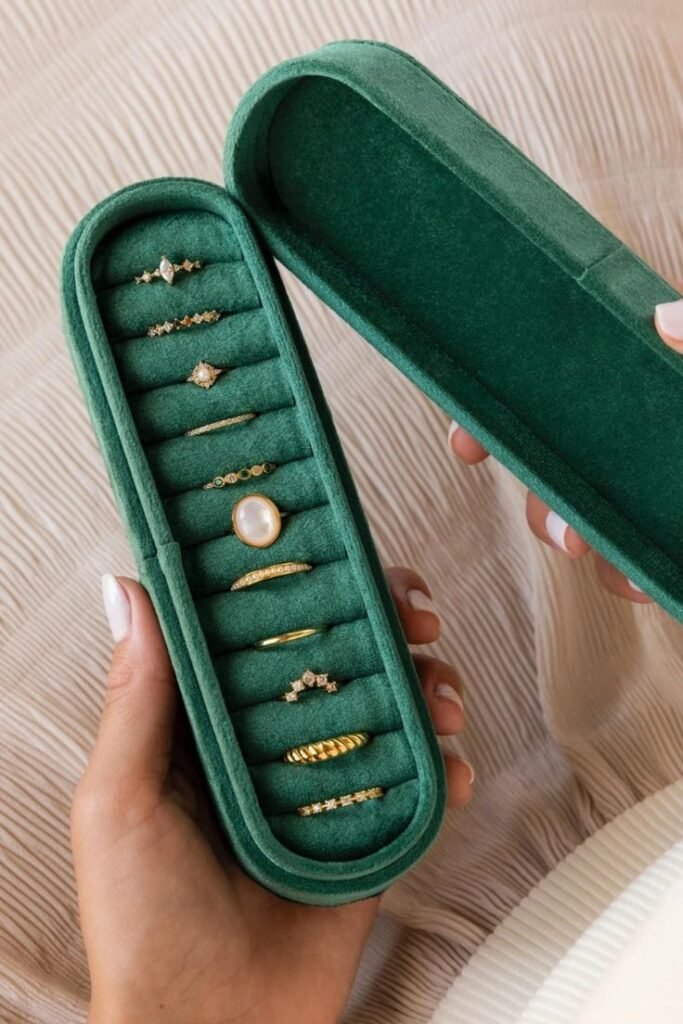
Beyond simple protection, jewelry boxes also save time. Searching through a cluttered drawer for a specific pair of earrings before heading out the door is frustrating, and a well-organized jewelry box with labeled compartments, dividers, or trays turns that search into a five-second task. There is also a psychological benefit: a jewelry box signals that its contents matter. Pieces that are stored with care tend to be treated with more care when worn, cleaned, and eventually passed on to someone else.
Finally, jewelry boxes offer a layer of discretion and light security. While no ordinary jewelry box should be relied upon as a substitute for a proper safe when storing extremely valuable items, a closed box tucked into a closet or drawer is far less conspicuous than jewelry left out in the open, and it reduces the temptation for casual handling by children, guests, or pets.
Types of Jewelry Boxes by Material
The material a jewelry box is made from affects its appearance, durability, weight, price, and even how well it protects delicate metals and stones. Here is a breakdown of the most common options.
Wooden Jewelry Boxes
Wood remains the most popular material for jewelry boxes, and for good reason. Hardwoods such as oak, walnut, cherry, and mahogany offer durability along with a warm, classic aesthetic that suits almost any bedroom or dressing room decor. Wooden jewelry boxes are often lined with velvet, satin, or suede on the inside, which cushions delicate items and prevents scratching. Many wooden boxes also include hidden compartments, secret drawers, or lockable sections, making them appealing for anyone who wants both organization and a bit of privacy. Because wood can expand or contract with humidity, quality construction and finishing matter a great deal; a well-made wooden jewelry box should have joints that stay tight and a finish that resists moisture.
Leather Jewelry Boxes
Leather jewelry boxes bring a more understated, travel-friendly aesthetic. They are often lighter than wooden boxes, which makes them a favorite for jewelry rolls and travel cases. Genuine leather develops a pleasant patina over time, while vegan or faux leather options provide a similar look at a lower price point and appeal to buyers who prefer cruelty-free materials. Leather boxes are frequently chosen for men’s jewelry storage, especially for watches, cufflinks, and tie clips, since the material pairs naturally with masculine wardrobes and accessories.
Acrylic and Glass Jewelry Boxes
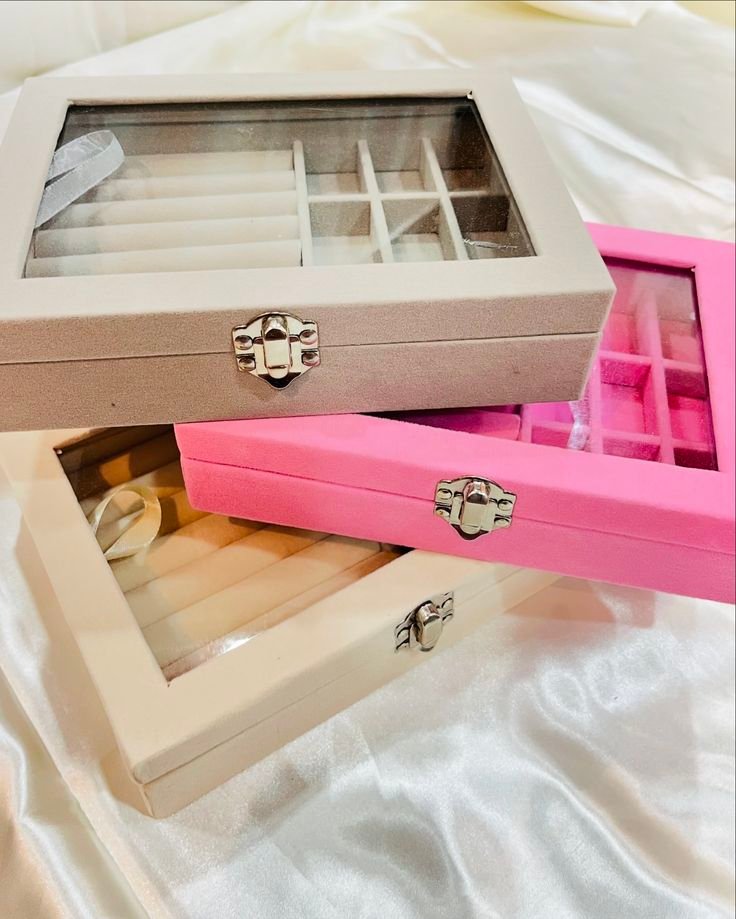
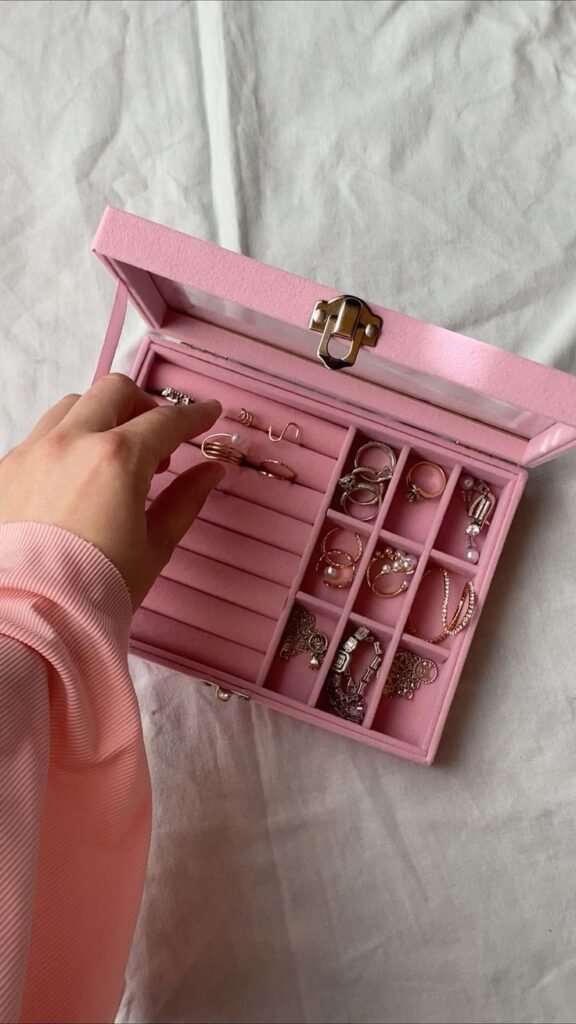
Clear acrylic and glass-topped jewelry boxes have surged in popularity, particularly among people who enjoy displaying their collection rather than hiding it away. These boxes let the owner see everything at a glance, which is especially useful for fashion jewelry collections with dozens of similar-looking pieces. Acrylic is lightweight and shatter-resistant, making it a practical choice for stacked drawer systems, while glass options tend to be reserved for higher-end display cases and vanity-top boxes.
Fabric-Lined and Soft-Sided Jewelry Boxes
Fabric jewelry boxes, often built around a foldable frame with cushioned compartments, are popular for travel because they pack flat and weigh very little. Soft-sided organizers with rows of loops, hooks, and zip pockets are ideal for handling necklaces without tangling and for keeping earring pairs together. While not as durable as wood or leather over the long term, these boxes are inexpensive, washable in many cases, and easy to replace.
Metal and Mixed-Material Jewelry Boxes
Metal jewelry boxes, sometimes finished with an antique brass, silver, or rose gold coating, tend to have a more decorative or vintage character. They are frequently combined with glass tops, mirrored panels, or filigree detailing. Because metal alone offers little cushioning, most metal jewelry boxes are lined internally with velvet or felt to prevent scratches. Mixed-material boxes, which combine wood frames with metal hardware or leather with acrylic windows, allow manufacturers to balance aesthetics, durability, and cost.
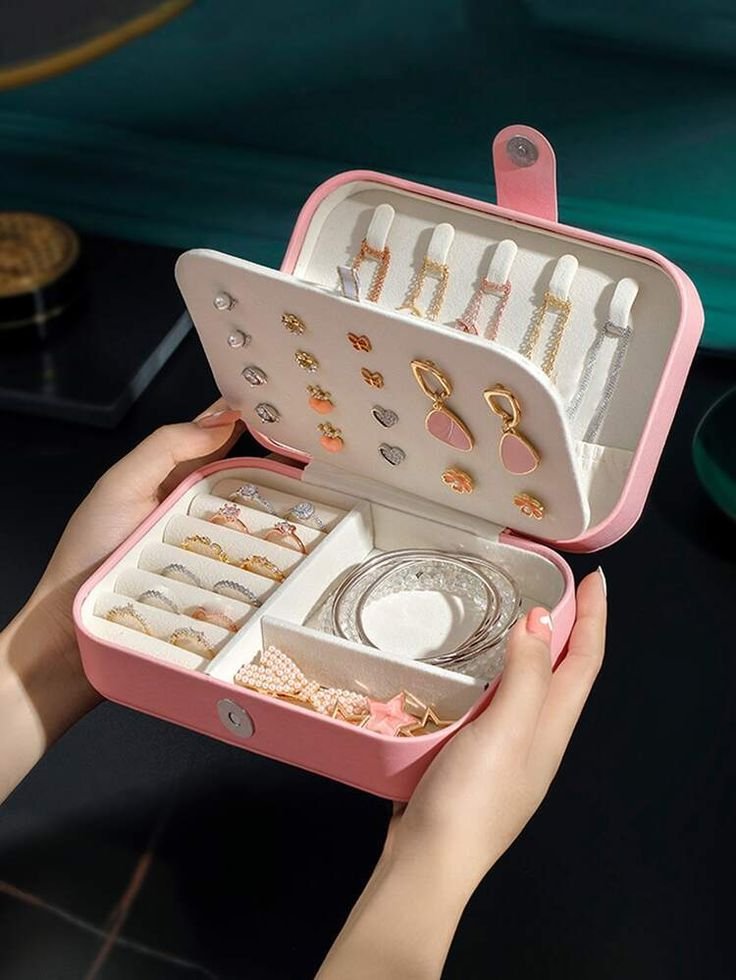
Types of Jewelry Boxes by Design and Function
Material is only part of the equation. The internal layout and overall form factor of jewelry boxes matter just as much, especially for people with larger or more varied collections.
Single-Tray Boxes
The simplest jewelry boxes consist of a single tray with a scattering of compartments for rings, small dividers for earrings, and a few slots or hooks for chains. These are ideal for smaller collections or as a first jewelry box for a teenager or young adult who is just beginning to accumulate pieces.
Multi-Tier and Stackable Organizers
For larger collections, multi-tier jewelry boxes with several stacked trays offer significantly more storage without requiring more surface area. Each tray typically slides or lifts out, revealing another layer underneath, and drawers are often added at the base for bulkier items like statement necklaces or bracelets. Stackable organizers, which are sold as individual modular trays that can be added over time, appeal to people whose collections are still growing and who want the flexibility to expand storage gradually.
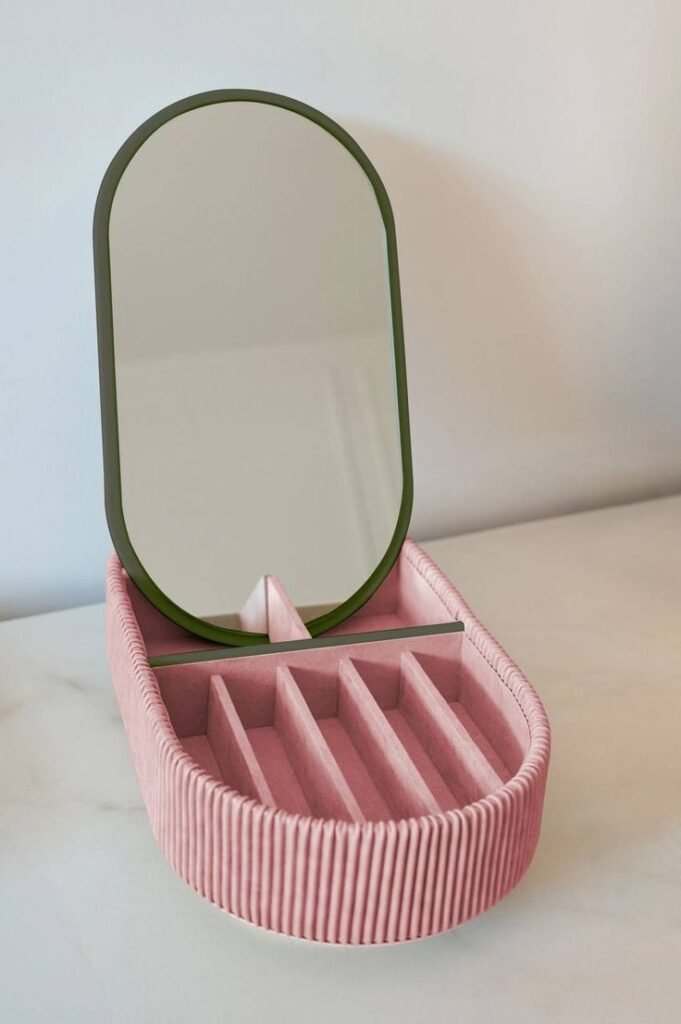
Standing Jewelry Armoires
A jewelry armoire is essentially a small cabinet, often designed to sit on the floor or on top of a dresser, with multiple doors, drawers, and sometimes a fold-out mirror. These larger jewelry boxes suit people with extensive collections of rings, necklaces, bracelets, and watches, and they are often chosen as a piece of bedroom furniture in their own right rather than a simple accessory box.
Travel Jewelry Cases
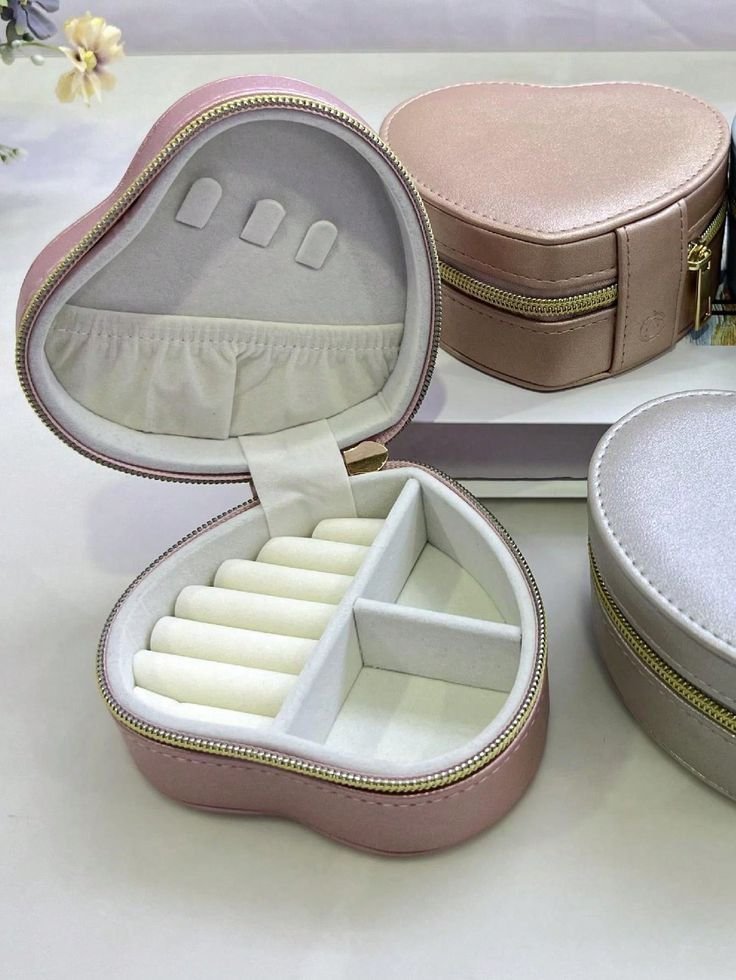
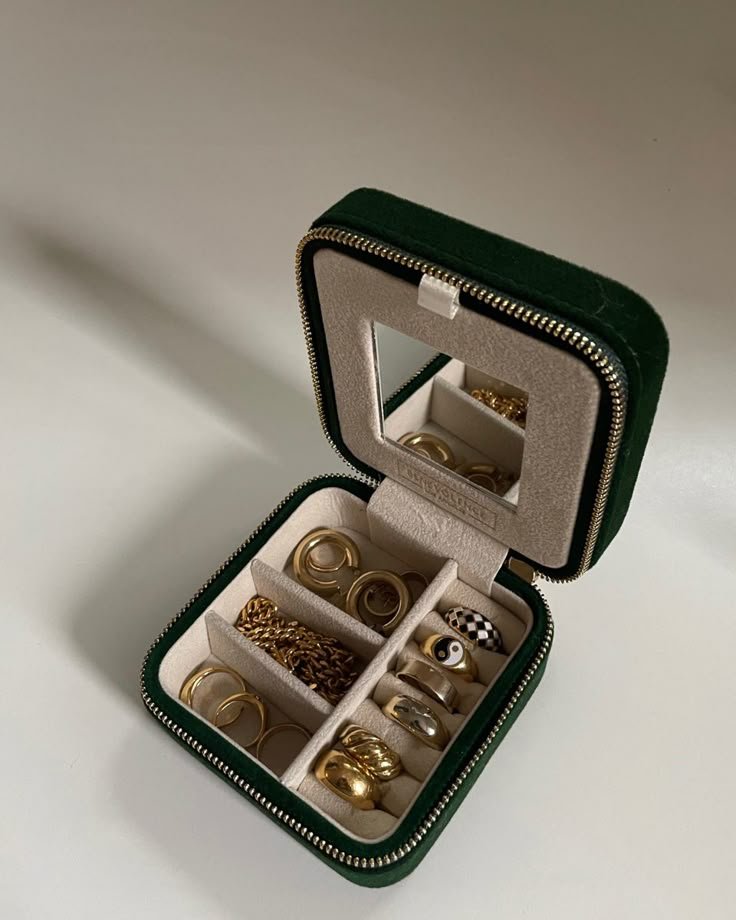
Travel jewelry boxes prioritize compactness and protection over sheer storage capacity. They are built to survive being packed into a suitcase, with padded compartments, secure closures, and compact footprints. Many travel cases fold or roll up, and some include a small mirror for touch-ups on the go. Anyone who travels frequently for work or leisure benefits from having a dedicated travel jewelry box, since it prevents pieces from tangling or scratching inside a suitcase pocket.
Wall-Mounted and Vanity Jewelry Organizers
For people short on surface space, wall-mounted jewelry boxes and organizers offer an elegant solution. These often combine a mirror with hooks, small shelves, and hidden compartments behind a hinged door, turning jewelry storage into a functional piece of wall decor. Vanity-style boxes, meanwhile, are designed to sit directly on a dressing table, often with a mirror built into the lid.
Ring Boxes and Single-Purpose Cases
Not every jewelry box needs to hold an entire collection. Small ring boxes, whether for a single engagement ring or a set of a few favorites, serve a very specific purpose and are often chosen for their presentation value as much as their storage function. These smaller jewelry boxes are frequently given as gifts alongside the ring itself.
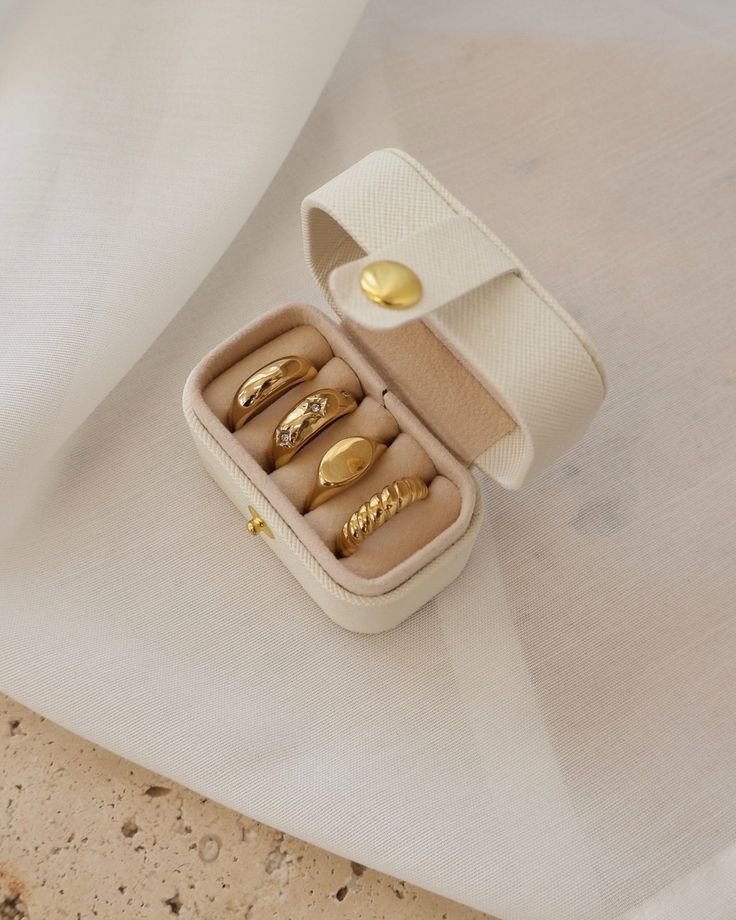
How to Choose the Right Jewelry Box for Your Needs
With so many types of jewelry boxes available, choosing the right one comes down to a handful of practical questions.
How large is your current collection, and how much do you expect it to grow? Someone with a handful of everyday pieces needs a very different box than someone who has been collecting for decades. If your collection is still expanding, a stackable or modular jewelry box gives you room to grow without needing to replace the entire system later.
What types of jewelry do you own? Rings need padded slots, necklaces need hooks or a way to lie flat without tangling, earrings need small individual compartments, and bracelets need enough room that they are not compressed or bent out of shape. A jewelry box that only offers one style of storage will inevitably leave some of your pieces poorly protected.
Do you travel often? If so, a dedicated travel jewelry case is worth owning even if you already have a larger box at home. Trying to use a large armoire-style box for travel is impractical, while trying to use a compact travel case as your only storage solution at home usually leaves you short on space.
What is your available surface or floor space? A jewelry armoire needs floor or dresser space that a small tray-style box does not. Wall-mounted jewelry boxes are a smart choice for smaller bedrooms or shared spaces.
Do you want to display your jewelry or keep it hidden? Acrylic and glass-topped boxes suit people who enjoy seeing their collection, while wooden boxes with solid lids and secret compartments suit people who prefer privacy and a bit of built-in security.
What is your budget? Jewelry boxes range from a few dollars for a simple fabric organizer to several hundred dollars for a handcrafted wooden armoire with fine joinery and premium lining. Setting a budget before shopping helps narrow the overwhelming number of available options.
Answering these questions honestly, rather than simply buying whatever jewelry box looks nicest in a photo, tends to produce a much more satisfying long-term purchase.
Jewelry Boxes as Gifts
Jewelry boxes are a popular gift in their own right, separate from any jewelry that might come with them. A well-chosen jewelry box tells the recipient that the giver has thought about how they live day to day, not just what they might like to wear. Personalized jewelry boxes, engraved with initials, a name, or a meaningful date, are especially popular for milestone occasions such as graduations, weddings, birthdays, and anniversaries.
Parents often give a young adult their first proper jewelry box as a rite-of-passage gift, sometimes paired with a first piece of fine jewelry such as a watch, a delicate necklace, or a pair of stud earrings. Couples frequently exchange jewelry boxes as engagement or wedding gifts, particularly boxes with a lockable feature or a hidden compartment meant for a ring. Because jewelry boxes come in such a wide price range, they also make thoughtful gifts for coworkers, teachers, or extended family members without requiring a large budget.
When choosing a jewelry box as a gift, it helps to think about the recipient’s existing habits. Someone who already owns a large collection might appreciate an upgrade to a multi-tier organizer, while someone just starting out might be better served by a simple, elegant single-tray box that will not feel empty. If you are shopping for a first-time buyer, our guide to organizing a growing jewelry collection walks through how to build a functional system piece by piece.
Caring for and Maintaining Your Jewelry Box
A jewelry box is only as useful as its condition allows it to be, so a small amount of regular maintenance goes a long way.
Keep it away from direct sunlight and extreme humidity. Wooden jewelry boxes can warp, crack, or fade if left near a sunny window or in a damp bathroom. Leather boxes can dry out and crack under similar conditions. A dresser top or closet shelf away from direct sunlight is usually the safest location.
Dust and wipe down the exterior regularly. A soft, dry cloth is usually sufficient for wood and leather exteriors, while a slightly damp cloth followed by a dry one works well for glass or acrylic surfaces. Avoid harsh cleaning chemicals on wood finishes or leather, since these can strip protective coatings.
Line compartments with soft fabric if the box does not already include lining. Felt, velvet, or microfiber liners reduce friction between pieces and help prevent scratches, which matters most for boxes storing gemstones or softer metals like gold and silver.
Address tarnish-prone metals separately. Sterling silver, in particular, benefits from an anti-tarnish lining or an anti-tarnish strip placed inside the compartment, since ordinary air exposure gradually dulls silver over time. According to the Gemological Institute of America’s jewelry care guidance, jewelry should never be left loose on a dresser top, and individually padded compartments or anti-tarnish pouches are the safest way to store it long term.
Check hinges, locks, and drawer slides periodically. Wooden and metal jewelry boxes with moving parts benefit from an occasional check to make sure hinges are not loosening and drawer slides are not sticking. A drop of appropriate lubricant on a stiff hinge can extend the life of the box significantly.
Empty and reorganize the box every so often. Over months and years, jewelry boxes tend to accumulate pieces that are no longer worn, broken items waiting to be repaired, or duplicates. Periodically emptying the box, cleaning each piece, and reorganizing what goes back in keeps the system functional rather than letting it slowly turn into a junk drawer.
Modern Trends in Jewelry Box Design
Jewelry box design has continued to evolve well beyond the traditional wooden case with a mirrored lid.
Sustainable and eco-conscious materials have become a significant trend, with manufacturers turning to reclaimed wood, recycled fabrics, and water-based finishes rather than materials that rely on heavy chemical treatment. Buyers increasingly ask where materials come from and how a box was manufactured, not just how it looks on a shelf.
Minimalist design has also grown in popularity, moving away from ornate carvings and heavy velvet in favor of clean lines, neutral tones, and understated hardware that fits more easily into modern, uncluttered interiors. This shift mirrors broader trends in home decor toward simplicity and functionality.
Modular and customizable systems let buyers mix and match trays, drawers, and inserts to build a jewelry box that matches their exact collection rather than settling for a fixed, one-size-fits-all layout. This is particularly popular among younger buyers who are still building their collections and do not want to commit to a single rigid design.
Smart features are beginning to appear in higher-end jewelry boxes as well, including built-in USB charging ports for a nearby phone or watch, integrated LED lighting for better visibility, and, in some premium models, small electronic locks or fingerprint access. While these features add cost, they appeal to buyers who want their jewelry box to double as a small piece of connected furniture rather than a purely passive storage container.
Multi-functional furniture is another growing category, where a jewelry box is built into a mirror, an ottoman, or a nightstand, saving space in smaller homes and apartments where a dedicated armoire is not practical.
DIY Jewelry Boxes Versus Buying Ready-Made
Some people enjoy building or customizing their own jewelry boxes rather than buying one ready-made. A basic wooden box kit, some fabric lining, and a few dividers can produce a perfectly functional jewelry box for a fraction of the cost of a premium retail option, and the process appeals to anyone who enjoys a hands-on project. DIY jewelry boxes are also popular gifts, since a handmade box carries obvious sentimental value that a store-bought item cannot replicate.
That said, ready-made jewelry boxes have clear advantages for anyone who wants reliable construction, tested hinges and locks, and a finished look without investing hours of labor. Manufactured jewelry boxes also benefit from design refinement that has been tested across thousands of customers, meaning compartment sizes, tray depths, and lining materials have usually been optimized in ways that a first-time DIY project might not achieve on the first attempt. For most buyers, the right choice comes down to whether they are shopping for function, for a creative project, or for a mix of both.
Jewelry Boxes for Different Lifestyles
Not every buyer approaches jewelry boxes with the same priorities, and it helps to think about how your daily routine shapes what you actually need.
The minimalist wearer. Some people rotate through just a handful of favorite pieces, day after day: a wedding band, a pair of small studs, a simple pendant. For this kind of collection, an oversized armoire is overkill. A small single-tray box, or even a shallow dish with a lid, keeps things simple without wasted space. The goal here is speed and simplicity, not elaborate organization.
The dedicated collector. At the other end of the spectrum are people who have spent years, or decades, building a substantial collection across multiple categories: fine jewelry for special occasions, costume pieces for everyday wear, family heirlooms, and perhaps a growing watch collection as well. This kind of buyer usually benefits most from a multi-tier organizer or a full jewelry armoire, since a smaller box will inevitably become cramped and disorganized within a matter of months.
The frequent traveler. For someone who packs jewelry for work trips or vacations several times a month, a dedicated travel jewelry box is close to essential. Trying to make do with a sandwich bag or a spare pouch tends to result in tangled necklaces and lost earring backs. A compact, padded travel case earns its keep quickly, even for people who do not consider themselves particularly “into” jewelry.
The gift-giver and the sentimental keeper. Some jewelry boxes exist mainly to hold pieces with emotional rather than financial value: a late relative’s brooch, a child’s first bracelet, ticket stubs or small mementos tucked in alongside rings and necklaces. For this kind of use, a box with a secure lid, a small lock, or a hidden compartment often matters more than sheer storage capacity, since the priority is safekeeping rather than daily access.
The stylist or display-oriented owner. Finally, some people simply enjoy looking at their jewelry as much as wearing it. For this group, glass-topped boxes, acrylic stands, and open wall-mounted organizers turn a collection into a small piece of decor, turning what would otherwise be hidden away into something visible and enjoyed every day.
Common Mistakes People Make When Storing Jewelry
Even with a good jewelry box on hand, a few common habits can undermine its usefulness.
Overpacking a single compartment. Cramming several rings into one slot, or piling multiple necklaces onto a single hook, defeats the purpose of having dedicated storage in the first place. Pieces packed too tightly together will still scratch each other, even inside a lined box.
Ignoring humidity and temperature. Placing a jewelry box near a radiator, a sunny window, or inside a damp bathroom cabinet exposes both the box and its contents to conditions that accelerate wear, whether that means a warped wooden lid or tarnished silver.
Mixing metals and gemstones without separation. Diamonds, in particular, are hard enough to scratch nearly every other stone and most metals, so tossing a diamond ring in with softer gemstone pieces can cause damage that is not obvious until much later.
Forgetting to close clasps before storage. Necklaces and bracelets left unclasped are far more likely to tangle with neighboring pieces, turning a two-second retrieval into a frustrating knot-picking session.
Never revisiting the organizational system. A jewelry box layout that worked well for a small collection can become inadequate as that collection grows. Revisiting the system every year or so, rather than simply cramming new pieces wherever they fit, keeps the box functional over the long term.
Frequently Asked Questions About Jewelry Boxes
How many jewelry boxes does one person actually need?
There is no fixed rule, but many people find it useful to own at least two: a primary box at home for everyday storage and a smaller travel case for trips. Collectors with larger or more varied collections sometimes add a third box specifically for fine or sentimental pieces that need extra protection.
Are expensive jewelry boxes actually worth the price difference?
Higher-priced jewelry boxes typically offer better joinery, higher-quality lining fabric, sturdier hinges, and more thoughtful compartment design, all of which extend the life of both the box and the jewelry inside it. For a large or valuable collection, the extra investment usually pays off over time, while a modest collection may be served perfectly well by a mid-range option.
Can a jewelry box replace a safe for valuable pieces?
No. A jewelry box protects against everyday wear, tangling, and minor damage, but it is not designed to resist theft or fire in the way a proper safe is. Extremely valuable or irreplaceable pieces, such as fine engagement rings or family heirlooms, are usually better kept in a home safe or a bank safe deposit box, with a jewelry box reserved for pieces worn more regularly.
What is the best way to store jewelry that is rarely worn?
Pieces worn only occasionally still benefit from individual compartments or pouches rather than being grouped loosely together. Anti-tarnish strips are particularly useful for silver pieces that may sit untouched for months at a time.
Do children need their own jewelry boxes?
A simple, inexpensive jewelry box is often a good early gift for a child or teenager, helping build the habit of caring for their belongings before they own anything of significant value. As their collection and their sense of personal style develop, they can graduate to a more substantial box later on.
Conclusion
Jewelry boxes are far more than decorative containers sitting on top of a dresser. They protect delicate metals and gemstones from scratches and tarnish, save time by keeping every piece easy to find, and, in many cases, carry sentimental weight of their own as gifts passed between generations. Whether you are drawn to a classic wooden box with a velvet lining, a sleek acrylic organizer that shows off your entire collection at a glance, a rugged leather case built for travel, or a modern armoire with built-in lighting, the right jewelry box comes down to understanding your collection, your space, and your habits.
Taking the time to choose thoughtfully, and then maintaining the box properly once you own it, pays off for years. A well-chosen, well-cared-for jewelry box will keep your rings untangled, your earrings paired, and your most meaningful pieces safe for as long as you own them, and often long after, as they are handed down to someone else who will one day be searching for their own perfect jewelry box. For more on building out your storage system piece by piece, take a look at our complete jewelry storage and organization checklist, or browse our seasonal jewelry care calendar for a month-by-month maintenance routine.