Introduction: A System at a Crossroads
The world’s health systems were built for a bygone age. Much of the architecture we rely on today emerged after World War II, when populations were younger, illnesses were predominantly acute rather than chronic, and there was no shortage of medical professionals. These conditions belong to a world that no longer exists.
In 2026, citizens are living longer than any generation before them but spend more of those extra years in ill health. Non-communicable diseases like cancer and diabetes now account for around three-quarters of global deaths. The number of people aged 60 and over has already passed 1.1 billion—around one in seven people—and by 2030, it is set to reach 1.4 billion.
Yet health systems face a projected shortfall of 11 million workers by the decade’s end. As demand rises and staff numbers fall, patients face delays in diagnosis and treatment. It is a gap no country can train its way out of. And with health spending in many advanced economies already above 10% of GDP, fiscal pressures are intensifying.
Healthcare systems today are facing pressures like never before. Demand is rising faster than capacity, costs are increasing faster than affordability, and expectations are growing faster than our systems can adapt. The way healthcare has been delivered for the past 50 years will not be enough for the next 50.
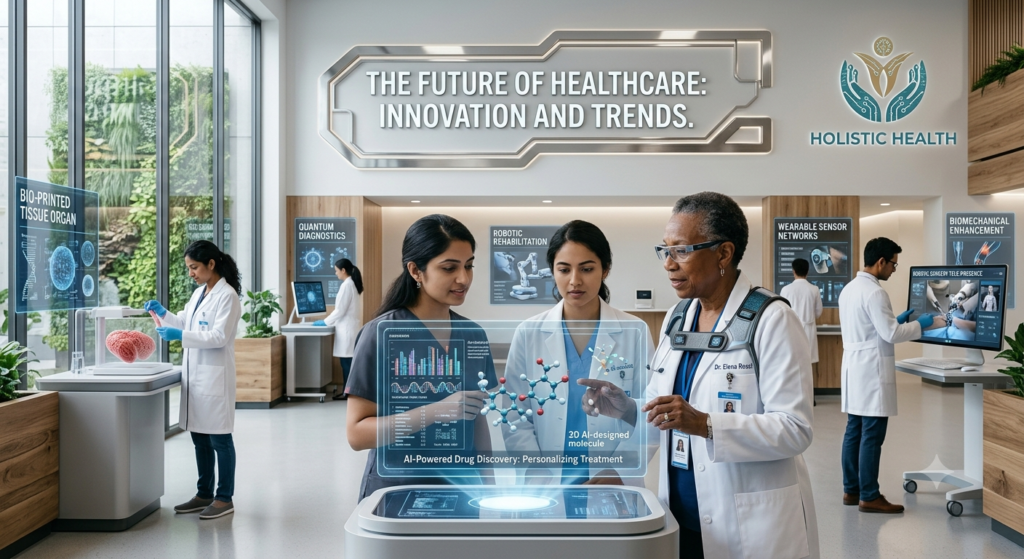
This is the context in which **the future of healthcare: trends and innovations** are emerging not as luxury enhancements, but as structural necessities. Technology is stepping in to match the scale and complexity of today’s healthcare needs, offering solutions that can expand capacity without expanding headcount, and grow care without growing costs.

The AI Revolution: From Administrative Burden to Clinical Intelligence
Artificial intelligence has moved decisively from the experimental stage to the very core of clinical processes. In 2026, AI is capable of planning and executing multi-step workflows, whether through faster documentation and smarter triage or more efficient logistics.
Ambient Intelligence: Freeing Clinicians to Care
One of the most immediate and impactful applications is AI-powered ambient listening technology. On average, clinicians deal with around three hours of paperwork per day, administrative burdens that drain time and energy from the frontline. A study published in JAMA Network Open found that ambient AI cut note-writing’s mental load by almost half and eased the sense of working under pressure.
The impact on patient care has been remarkable. The share of clinicians who said they could give patients their undivided attention rose from 58% before using AI to 93% after using it. This represents more than a convenience—it addresses the fundamental purpose that drives healthcare professionals to their calling.
As one healthcare leader aptly noted, “free 20% of clinicians’ time, and you effectively return thousands of full-time equivalents to patient care, all without adding a single unit of labour”. This is the kind of efficiency gain that defines **the future of healthcare: trends and innovations** as practical solutions rather than abstract possibilities.

AI in Diagnostics: Seeing More, Sooner
AI’s diagnostic capabilities are transforming how diseases are detected and treated. In colon cancer screening, a recent meta-analysis found that AI-assisted colonoscopy improves detection of precancerous polyps by around 20%. Spotting these polyps earlier means simpler treatment, higher survival, and lower cost.
Similarly, Medtronic’s GI Genius™ system, an AI-assisted colonoscopy tool trained on millions of colonoscopy videos, scans every visual frame to help reduce the chance of missed polyps by up to 50%. This gives doctors an extra set of eyes that never tires and never misses a frame.
For conditions like aortic stenosis—a serious and often undertreated heart condition—early detection is critical. The symptoms are subtle, but AI can help doctors analyze medical data to find warning signs faster. As Dr. Austin Chiang, Chief Medical Officer at Medtronic, observes: “Ultimately, the future will continue to combine AI insights with human judgment to deliver proactive, patient-centered care”.
The power of predictive data analysis now allows AI to detect serious diseases like cancer or cardiovascular disease before clinical symptoms appear, with near-perfect accuracy. This marks a fundamental shift from reactive to proactive healthcare—a cornerstone of **the future of healthcare: trends and innovations**.

The Rise of Agentic AI and Virtual Triage
AI is becoming a prominent part of the first point of patient contact. When individuals call with symptoms or concerns, many health systems now use virtual AI-driven bots to complete initial intake before escalating cases to clinicians. This approach is growing rapidly due to workforce shortages and increased demand for remote and hybrid care.
Agentic AI is also playing a growing role in administrative tasks such as billing, coding, and telehealth documentation. These tools may reduce clinician burden, though reported efficiency gains vary widely and require careful attention to error rates. Ensuring reliability and accuracy will be essential as automation and the implementation of AI-driven health continues to grow.
Beyond the Hype: The Promise and Perils of AI Integration
As AI becomes more deeply embedded in healthcare, ensuring reliability, accuracy, and trust is paramount. Many patients feel frustrated when interacting with a non-human system during moments of anxiety and are unsure whether the responses and feedback are accurate.
Healthcare leaders are increasingly aware that AI should serve as a tool for learning and support rather than diagnosing—especially for health conditions like heart disease, which can present differently in women than in men. “AI can be a great starting point, but it should never replace a conversation with a healthcare professional,” cautions Dr. Kendra Grubb, Vice President and Chief Medical Officer at Medtronic.
The future is not humans versus machines; it is humans plus machines. This philosophy underpins the most successful implementations of **the future of healthcare: trends and innovations**, where technology amplifies human capability rather than attempting to replace it.
Telemedicine and Hybrid Care 2.0: The New Standard of Delivery
The COVID-19 pandemic accelerated telemedicine adoption across all age groups, but its penetration remains low in absolute terms. Starting in 2026, a hybrid model is evolving to become the primary method of care delivery, integrating AI-powered telehealth, continuous remote monitoring, smart triage, and predictive analytics into a responsive, patient-centered experience that meets people where they are.
From Reactive to Predictive: The Hybrid Care Model
The most important change is not just about technology but about mindset. For years, healthcare has focused on treating people when they get sick. Hybrid Care 2.0 turns this approach on its head.
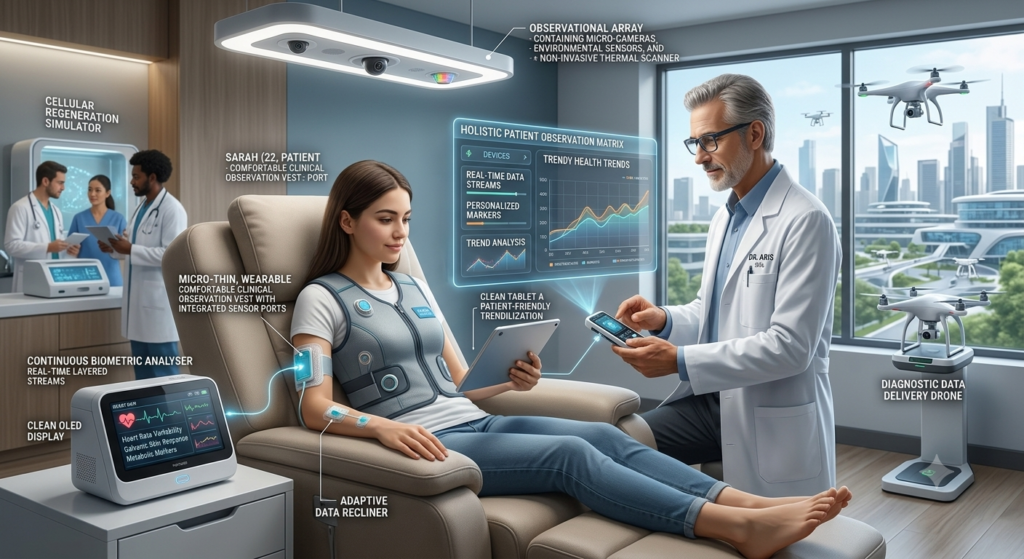
Wearables and remote monitoring devices generate a steady stream of vital data: heart rate, oxygen levels, blood pressure, and blood sugar trends. AI analyzes this data against personal baselines and population standards, surfacing early warning signs before patients feel them. For high-risk conditions like heart failure, COPD, and diabetes complications, that early signal is often the difference between staying at home and hospitalization.
This is all the more consequential for two of the most demanding areas in healthcare: chronic disease management and post-acute recovery. Hybrid Care 2.0 offers hospital-level monitoring without the high costs or disruptions. Patients recovering from surgery or managing complex conditions receive AI-guided virtual consultations, in-home support when needed, and automated escalation protocols that trigger in-person intervention only when the data demand it.
Real-World Impact: Evidence from the Ground
The evidence for this model is already accumulating. Saudi Arabia’s Seha Virtual Hospital recorded over 16 million virtual appointments and consultations in 2025, a 49% increase from the previous year. As part of Saudi Vision 2030, it connects local clinics and specialists for real-time care, illustrating a major shift in specialist access amid challenges posed by distance.
In the UK, NHS virtual wards reached nearly 12,700 beds by late 2025, with roughly 80% occupancy. These are scalable models delivering acute-level care at a fraction of the cost.
The AI remote patient monitoring market sits at approximately $2 billion and is expected to reach over $8 billion by 2030—a 27.5% annual growth rate driven primarily by one metric: reduced hospitalizations. This validation that prevention, properly executed, is economically viable at scale is central to **the future of healthcare: trends and innovations**.
Healthcare Workforce: A Problem That Can’t Wait
The urgency behind Hybrid Care 2.0 is fundamentally demographic. The U.S. faces a projected shortage of up to 86,000 doctors by 2036, with more than 78,000 nursing vacancies expected in 2025 alone. These numbers do not reflect the rising number of retirements and burnout among clinicians further straining the workforce.
When clinicians are informed by continuous data from wearables and electronic health records, they can manage more patients effectively without compromising quality. The technology becomes a force multiplier, especially in areas most impacted by workforce shortages.
As McKinsey research highlights, virtual hospital models and remote patient monitoring are easing the pressure on overcrowded public healthcare facilities. Technology doesn’t replace humans, but it optimizes human resources to serve those who need them most.
Genomics: From Pilot to Everyday Care
Genomics will move from selective pilots to broader everyday use in 2026, as falling costs, faster results, and improved technology make sequencing more accessible.
Genomics is already helping many people understand their risk of long-term conditions, how they respond to certain medications, and what to consider before starting a family. Bupa’s My Genomic Health programme has moved out of the pilot phase and is now live in the UK, Spain, Australia, Hong Kong, and Poland, with more markets planned during the year.
The NHS has made genomics a central priority in its new 10-year plan, expanding whole-genome sequencing and newborn testing with the aim of bringing genomic insights into more routine preventive care. This integration of genomic medicine into standard practice represents a significant step forward in personalized healthcare and is a key component of **the future of healthcare: trends and innovations**.
Digital Therapeutics: The Rise of Medical-Grade Software
Alongside artificial intelligence, the explosion of Digital Therapeutics (DTx) is becoming one of the fastest-growing healthcare technology trends of 2026. DTx refers to medically certified software that uses algorithms to treat, manage, or prevent chronic diseases such as diabetes, depression, or hypertension.
Instead of relying on expensive imported medications that may be beyond the reach of low-income individuals, patients can now receive “software-based treatment” right on their smartphones. This represents a democratization of healthcare that has profound implications for global health equity.
The healthcare app marketplace is dividing into general wellness apps and medically oriented apps designed for disease management, reimbursement pathways, and clinical support. As more app publishers enter the medical category, stronger technical and ethical guardrails and clinical regulation are needed. With hundreds of thousands of medical apps available globally, it is increasingly difficult for clinicians and patients to determine which ones are evidence-based, safe, and trustworthy.
To support quality and transparency, new evaluation frameworks are emerging to identify apps that demonstrate measurable clinical benefits, adhere to ethical practices, and meet technical expectations for privacy, safety, and usability. The demand for trustworthy, medically validated digital tools—especially in areas such as mental health, chronic disease monitoring, and aging-related conditions—is expected to rise substantially.
The IEEE Global Medical Mobile App Assessment and Registry is the only publicly accessible hub of medical apps that have been vetted on 140 points of criteria focused on clinical efficacy, technical soundness, and ethical design. This registry fills a gap left by app stores, regulatory processes, and commercially curated repositories by offering a neutral, consensus-driven evaluation approach.

Connected Devices and the Consumerization of Healthcare
Connected devices and wearables have been generating continuous health data for years, but advances in sensor quality, payment models, and clinical integration are expanding their role in care delivery. These devices increasingly produce data that is not only longitudinal but clinically meaningful.
From Passive Trackers to Active Interventions
Examples of this evolution are everywhere. Continuous glucose monitors (CGMs), including newly launched direct-to-consumer CGMs such as Lingo or Stelo, show how real-time, clinical-grade data can directly influence therapy decisions and patient behavior in metabolic health.
Consumer wearables like WHOOP and Oura serve as daily engagement tools by generating longitudinal signals in sleep, recovery, fertility, and cardiovascular health, and by increasingly leveraging AI to deliver personalized guidance. Tech giants like Apple and medtech startups alike are embedding health sensors in everyday devices and using AI to detect issues earlier—smartwatch EKGs flagging atrial fibrillation being a prime example.
The connected health ecosystem allows a person in a remote area, with just an inexpensive wristband, to have their heart rate and oxygen levels monitored in real-time, just like being in the intensive care unit of an international hospital.
The Future: Devices as Triggers for Action
Devices will increasingly serve as triggers for action rather than passive trackers, with signals prompting follow-up testing, therapy adjustments, or virtual visits. Raw data alone has limited value without clinical or behavioral next steps. As a result, value will increasingly shift from hardware alone to how device-generated data is interpreted, connected, and acted upon within broader care workflows.
This shift will lead to a continued blurring of boundaries between “clinical” and “consumer” devices, with usability and ongoing engagement becoming strategic differentiators. AI-assisted wearables could help identify early warning signs before symptoms start, empowering patients to seek care sooner and giving clinicians insights to personalize treatment. This is another dimension of **the future of healthcare: trends and innovations** where technology meets patient empowerment.
Digital Twins: Virtual Rehearsals for Better Outcomes
Digital twin technology—creating a virtual version of a patient that helps clinicians personalize care and predict health outcomes—is emerging as one of the most promising innovations in healthcare. By combining clinical, physiological, and lifestyle data, a digital twin can mirror the unique characteristics of individual patients.
While a comprehensive human digital twin hasn’t been created yet, patients are already beginning to benefit from this technology. Doctors can now “rehearse” a heart valve replacement using a digital replica of the patient’s heart, predicting how the body may respond to the procedure.
Medtronic is also exploring how digital twins could help develop safe therapies faster. As Dr. Nathalie Virag, Vice President and General Manager at the Medtronic Bakken Research Center, explains: “A digital twin can help us accelerate research, reduce the need for animal testing, and avoid exposing humans to unnecessary risks. Many early-stage experiments can be conducted on a computer before moving to animal or human testing”.
What’s next? Digital twins will become smarter and help clinicians move from reacting to patient health challenges to predicting individual health risks before symptoms appear. This predictive capability is central to **the future of healthcare: trends and innovations** focused on prevention.
Cybersecurity: Protecting the Connected Care Ecosystem
As healthcare technology becomes more connected and data-driven, it creates opportunities to improve care, but this progress raises an important question: How is patient safety and sensitive information protected in health tech?
The healthcare cybersecurity attack surface grows significantly with every connected device. Remote monitoring tools, data-generating devices, and connected clinical systems all create new potential points of vulnerability. Older medical devices, some of which run on outdated software or lack modern connectivity standards, are the most vulnerable as they are difficult to secure and still widely used in clinical environments.
Regulatory attention is intensifying globally, and investment in cybersecurity is expected to rise as organizations navigate evolving risks. Medtronic prioritizes patient safety through a security-by-design approach, assessing potential security vulnerabilities of a device from the design stage and onwards throughout development.
The company also attends DEFCON, the world’s largest hacker conference, to get inside the minds of hackers and challenge them to break into their medical devices. During DEFCON 2025, they learned from more than 200 hackers to make devices safer before they reach patients.
As Nancy Brainerd, Senior Engineering Director at Medtronic, observes: “Healthcare is trending toward more interconnected technology, and there’s a demand for data to predict outcomes. This should lead to giving patients more control and visibility to their care”.
Mental Health: Expanding Capacity to Meet Demand
While we’ve seen an increase in awareness and understanding of mental health, along with a willingness and desire to seek help, access to support hasn’t kept pace. Limited specialist provision means many people struggle to get help when they need it—and often don’t know where to start or what type of support is right for them.
In 2026, the priority for health systems and providers is improving access. That means helping people reach support earlier and more easily through more professionals, more facilities, and more digital routes into care. This is a crucial aspect of **the future of healthcare: trends and innovations** that addresses the whole person, not just physical health.
Bupa is increasing mental health coverage, expanding virtual support, and rolling out Mindplace, a global network of 200 dedicated mental health clinics. More than 30 clinics have opened in the UK, Australia, and Spain, with a further 75–100 launching in 2026.
New guidance by the World Health Organization calls for a shift towards community-based care and earlier intervention, reinforcing the global priority to expand access to mental healthcare heading into the new year.
Healthy Communities: Building Places That Support Wellbeing
Place and environment are major drivers of health—and in 2026, health systems are expanding efforts to help cities become healthier, more inclusive, and more climate resilient.
With nearly 70% of the world’s population expected to live in cities by 2050, urban environments are becoming the frontline for supporting wellbeing and adapting to climate risks. How people move, the air they breathe, and the green space around them all shape everyday health.
Through initiatives like the Resilient Cities: Reimagining Health programme in partnership with Reckitt, Sanofi, the Resilient Cities Network, and the Yale School of Public Health, health organizations are supporting 29 cities in 19 countries to protect people’s health in a changing climate.
Partnerships with the Norman Foster Institute for Sustainable Cities are deepening, helping future architects and planners put health at the centre of urban design. The goal is to extend impact across more than 50 cities, delivering locally-led interventions that improve wellbeing, reduce climate-related diseases, and build more resilient communities.
Connected Data: The Foundation of Transformation
The future of healthcare depends on connected data, clear standards, and smart regulation. Insights generated from the use of data will have a greater impact on day-to-day care in 2026. Health systems now hold enough meaningful information to offer guidance and treatments that reflect people’s specific risk factors and behaviours, rather than broad population averages.
Prevention is also becoming more tailored, shifting from generic lifestyle advice to recommendations based on what will make the biggest difference for each person. By providing a clearer, more coherent view in one place, patients can feel more in control of their health, while clinicians can better diagnose, treat, and care for patients.
Across the healthcare sector, we’re seeing more steps to connect different data sets. In Singapore, the government’s Healthier SG programme is building a nationwide data infrastructure that links clinical and wearable data with primary care teams, enabling more personalised guidance and earlier intervention. In Australia, the state My Health Record is being modernised to expand the data available across the health sector, laying foundations for more personalised digital pathways in 2026.

Healthcare Affordability: The Elephant in the Room
Healthcare affordability is one of the three megatrends reshaping how care is delivered, alongside ageing populations and the advancement of technologies including AI, robotics, and imaging.
Global health spending reached USD 7.8 trillion—10% of world GDP—in 2017, according to the WHO. And with the over-65 population likely to grow 60% to 1 billion by 2030, growth in healthcare spending is expected to continue to outpace the expansion in GDP.
A staggering amount is wasted on unnecessary and low-value care—between USD 760 billion and USD 935 billion in the US alone in 2019, equivalent to roughly 25% of total health spending in the country. This inefficiency represents both a problem and an opportunity for **the future of healthcare: trends and innovations** focused on value-based care.
The Value Equation
As Dr. Indu Bhushan, former CEO of India’s National Health Authority and architect of Ayushman Bharat, the world’s largest health assurance scheme, explains: “Value is an outcome, cost is an input”. From a patient and society perspective, value means better health outcomes, equity, and improved population health for the resources available.
When deciding whether government should support new health technologies, Dr. Bhushan applies three tests: whether the improvement is meaningful and not merely statistical, whether it is cost-effective relative to existing alternatives, and whether it improves or undermines equity of access between those who can and cannot afford it.
These principles are essential for ensuring that **the future of healthcare: trends and innovations** benefit all segments of society, not just those who can afford premium care.
Health Equity: Technology as a Great Equalizer
One of the most promising aspects of current healthcare innovation is its potential to address inequities in access to care. The WHO estimates that 4.5 billion people lack access to essential health services—a gap no modern system should accept.
At the European Patent Office, medical technology, biotechnology, and pharmaceuticals are now among the ten most active technology fields. Patent applications for these fields have grown significantly over the past decade. Many of these advances underpin AI in healthcare, from digital diagnostics to continuous monitoring.
When applied responsibly, innovation can turn today’s care lottery into genuinely equitable access for all—especially hard-to-reach communities.
The Democratization of Diagnostics
AI algorithms can scan millions of X-rays or CT scans in seconds to find even the smallest lesions, reducing diagnostic costs by up to 10 times compared to traditional methods. This is a lifeline for the poor, giving them access to the diagnostic expertise of world-leading specialists without having to pay exorbitant fees.
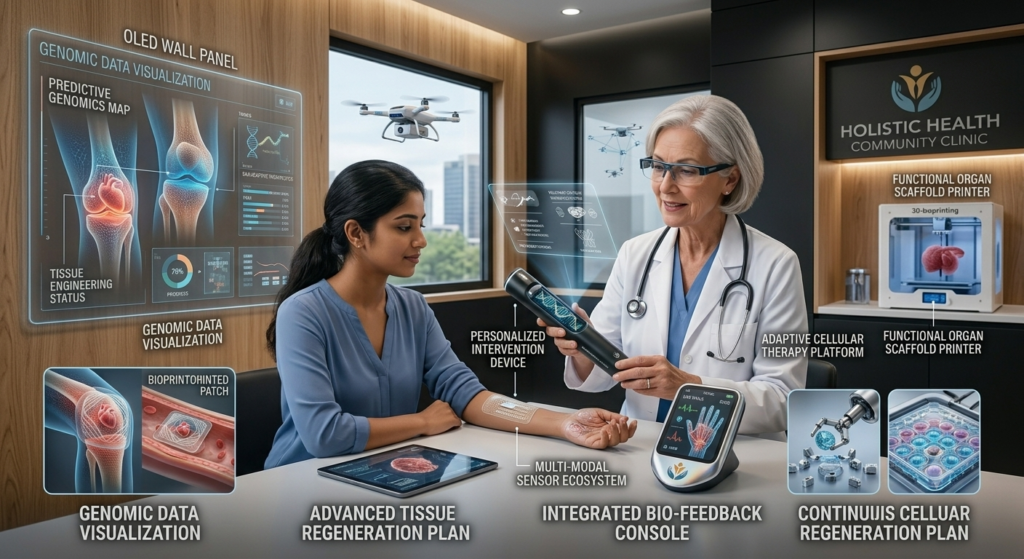
The combination of bioprinting technology and advanced robotics systems is directly addressing the surgical cost crisis. Previously, manufacturing replacement parts or simulating complex surgeries cost tens of thousands of dollars; now, 3D printing technology has reduced the cost of producing medical materials to a fraction of that, opening up opportunities for millions of impoverished patients awaiting organ transplants or orthopedic surgery.
AI-powered remote surgical robots are also erasing geographical boundaries, allowing a super-doctor in New York to perform complex surgery on a patient on an island halfway around the world with virtually no delay.
The Consumer Health Era
The next era of consumer health will not be achieved through single point solutions, but through cohesive ecosystem-level approaches across the patient journey. This means linking testing, treatment, and monitoring into seamless experiences that meet patients where they are.
Diagnostics are shifting from one-off tests to integrated care pathways, where results automatically route patients to virtual consults, prescriptions, or ongoing monitoring. Over time, diagnostics will become more longitudinal and signal-driven, with subscription-based models and repeat testing tied to prevention, risk stratification, and chronic condition management.
As healthcare becomes even more patient-driven, differentiation comes from deliberately connecting diagnostics, digital platforms, devices, and therapies into cohesive patient journeys rather than more easily imitated point solutions. Companies win when testing leads naturally to care, care leads to treatment, and treatment is supported by ongoing monitoring.

Conclusion: A New Era of Healthcare
The future of healthcare is not a distant vision—it is unfolding now. The trends and innovations discussed in this article represent a fundamental transformation of how healthcare is delivered, accessed, and experienced.
We are standing at a Promethean moment. Breakthroughs in foundation models, specialized AI, and agentic systems mean AI is now capable of planning and executing multi-step workflows, whether through faster documentation and smarter triage or more efficient logistics. These tools can expand capacity without expanding headcount, grow care without growing costs, and return time to teams—the scarcest resource in a labour-short system.
But technology alone is not the answer. The success of **the future of healthcare: trends and innovations** depends on connected data, clear standards, smart regulation, and above all, a commitment to keeping humans at the center of care.
As healthcare leaders who gathered at IHH Healthcare’s FutureHealth.Now conference in Singapore observed, the goal is simple: better outcomes, greater access, and better value for patients. The convergence of AI, genomics, digital therapeutics, connected devices, and hybrid care models is making this goal increasingly achievable.
The 2026 medical technology revolution has finally transcended the boundaries of dry technical specifications to reach the core value of compassion. As AI, IoMT, and DTx become widespread, they are not only enriching technology corporations but are also becoming tools for creating a more equitable healthcare system where a human life is no longer valued by the thickness of a wallet.
The greatest hope of the digital age has taken shape: a world where more people enjoy higher quality healthcare, and where cutting-edge technology is created to protect the right to a healthy life for all inhabitants of the planet. This is the promise of **the future of healthcare: trends and innovations**—a future where technology serves humanity, and where better health is within reach for everyone.
Conclusion: Embracing the Future of Healthcare
The future of healthcare is being shaped by groundbreaking innovations such as artificial intelligence, telemedicine, genomics, digital therapeutics, connected devices, and predictive analytics. These advancements are transforming patient care by making healthcare more accessible, personalized, efficient, and affordable. As healthcare systems continue to evolve, the focus will remain on improving patient outcomes, reducing costs, and ensuring equitable access to quality medical services worldwide.
Organizations such as the World Health Organization (WHO) and the Centers for Disease Control and Prevention (CDC) continue to support research and initiatives that drive innovation and improve global health standards. By embracing these technological advancements responsibly, healthcare providers can create a more resilient and patient-centered system for future generations.
To explore more insights on healthcare trends, technology, and innovation, visit Musalam Creations. Staying informed about emerging developments will help individuals and organizations prepare for the next era of healthcare transformation.