Table of Contents
The global healthcare sector is undergoing a profound transformation, driven by a confluence of technological breakthroughs, demographic shifts, and systemic pressures. For decades, health systems were built for a bygone era—a time of younger populations, acute illnesses, and a plentiful supply of medical professionals . Today, this model is structurally mismatched to the realities of the 21st century. As we look toward the future, it is clear that the health care in future will not be a simple extension of the present. Instead, it will be fundamentally reimagined, moving from a reactive, institution-centric model to a proactive, patient-centric ecosystem. This comprehensive guide explores the key trends, technologies, and strategic shifts that will define the health care in future, offering a roadmap for navigating this exciting and complex new landscape.
The Forces Shaping Tomorrow’s Health Care
Understanding the future of health care requires first understanding the forces that are making the current system unsustainable. These are not temporary challenges but structural shifts that demand a fundamental rethinking of how care is delivered.

The Demographic and Workforce Crisis
One of the most significant drivers of change is the global demographic shift. People are living longer than ever before, but they are spending more of those extra years in ill health . The number of people aged 60 and over has already surpassed 1.1 billion, and this figure is projected to reach 1.4 billion by 2030 . This aging population brings a corresponding rise in non-communicable diseases like cancer, diabetes, and cardiovascular conditions, which now account for approximately three-quarters of global deaths . These chronic conditions require long-term, coordinated management—a stark contrast to the acute, episodic care that most health systems were designed to provide.
Simultaneously, the healthcare workforce is facing a severe shortage. By the end of the decade, the world is projected to face a shortfall of 11 million health workers . This gap is so vast that “no country can train its way out of it” . The result is a system caught between skyrocketing demand and dwindling capacity, leading to clinician burnout, delayed diagnoses, and compromised patient care. This crisis is a primary reason why the health care in future must leverage technology to augment the workforce, not simply replace it.

Economic Pressures and the Shift to Prevention
Health spending in many advanced economies is already above 10% of GDP, and the costs are rising . In this environment, the health care in future must become more economically sustainable. This is driving a critical shift from a “sick care” model—which focuses on treating disease after it appears—to a proactive model centered on prediction and prevention .
This change is not just a clinical goal; it is an economic imperative. By investing in prevention and early detection, health systems can reduce the burden of expensive, late-stage treatments and hospitalizations. As a result, many health system executives are prioritizing preventive care and early detection as a key strategy for the year ahead . The health care in future will, therefore, be measured as much by its ability to keep people healthy as by its success in treating them.
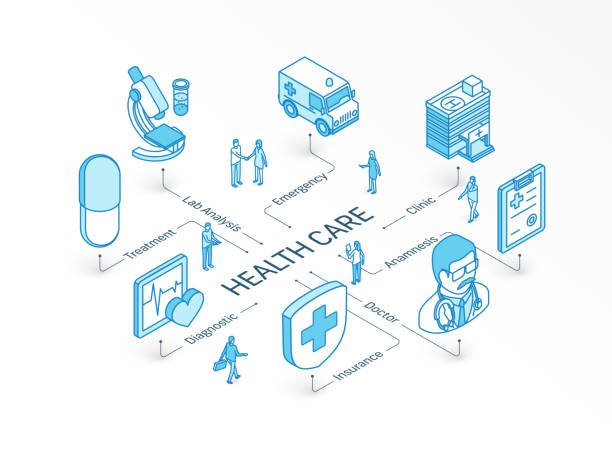
The Technological Catalyst: AI and Digital Transformation
Just as the system is reaching a breaking point, a new class of technology is emerging that can match the scale and complexity of today’s healthcare needs . Breakthroughs in artificial intelligence (AI), foundation models, and agentic systems mean that technology is now capable of planning and executing multi-step workflows, from faster documentation and smarter triage to more efficient logistics . These tools have the power to expand capacity without expanding headcount, effectively growing care without growing costs.
AI is no longer a futuristic concept; it is a present reality. In medical imaging, AI algorithms are achieving diagnostic accuracy comparable to, and sometimes exceeding, that of expert clinicians . Telemedicine and remote monitoring, accelerated by the COVID-19 pandemic, have become integral to healthcare delivery, bridging the gap between patients and providers . The health care in future will be defined by the seamless integration of these technologies into the fabric of care delivery, creating a system that is more efficient, accessible, and effective.

Core Shifts Redefining Health Systems
Several profound shifts will define the health care in future, moving it from a fragmented, institution-centric model to an integrated, patient-centric ecosystem. These are not just incremental changes but a fundamental re-architecture of how care is organized, delivered, and experienced .

Shift 1: From Treatment to Prediction and Prevention
This shift represents a fundamental change in the goal of healthcare. Instead of waiting for patients to develop symptoms, the health care in future will use data and analytics to identify health risks before they manifest. This is made possible by advances in data collection, wearable monitoring, and risk modeling.
Effective prevention depends on a “built healthy environment,” including better living conditions, nutrition, and physical capacity . This change will also require adjustments in health financing models, shifting the focus from paying for services to paying for health outcomes like Quality-Adjusted Life Years (QALYs) saved. The health care in future must grapple with important questions: when should predicted risks lead to intervention? How can overdiagnosis be avoided? And how can we ensure that preventive strategies benefit all populations rather than widening inequalities? .
A powerful example of this shift is AI’s ability to detect subtle early signals of severe conditions. For instance, research has shown that AI-assisted colonoscopy improves the detection of precancerous polyps by around 20% . Spotting these polyps earlier means simpler treatment, higher survival rates, and lower costs. Similarly, the European Patent Office reports that medical technology, biotechnology, and pharmaceuticals are now among the most active technology fields, with many of these advances underpinning AI in healthcare .
Shift 2: Artificial Intelligence-Enabled Digital Transformation
AI is the engine of the digital transformation in health care. In the health care in future, AI will not be an add-on but an integral part of the clinical workflow. According to health system leaders, the key areas where AI is expected to add significant value include operational efficiencies (like predictive patient flow and staffing), administrative task automation, clinician decision support, and patient experience .
For example, studies show that ambient AI can cut the mental load of clinical note-writing by almost half. Clinicians who use ambient AI report that the share of patients to whom they can give their undivided attention rose from 58% before using AI to 93% after . This ability to “free 20% of clinicians’ time” is how AI can “effectively return thousands of full-time equivalents to patient care, all without adding a single unit of labour” . By automating administrative burdens, AI helps restore the purpose and meaning of clinical work, making healthcare a “talent magnet” for a generation that values purpose-driven, flexible work .
However, the path to AI integration is not without its challenges. While many executives see the potential, only 22% of non-US respondents in a recent survey said AI was likely to be a major focus in 2026 . A key reason is the difficulty in demonstrating a clear return on investment (ROI). Many leaders reported that they haven’t measured returns or that it is too soon to see results . To maximize value, organizations need to develop an enterprise-wide AI strategy, avoid the “pilot trap,” and address staff concerns about job safety .
Shift 3: From Patient-Centric Care to Patient Engagement
While “patient-centered” care has long been a stated goal, the health care in future will take it a step further by enabling true patient engagement . With access to their own health data and tools that help them interpret it, patients will become active participants in their care journey, from prevention to treatment and long-term management.
This is a pivotal moment to consider why healthcare needs to be unbundled and rebundled. Today’s systems are often fragmented, serving institutions rather than patients. Clinics and services operate in silos, and patients like Rashida, a pregnant diabetic from a village outside Dhaka, experience “incomplete care” as her records don’t follow her between programs .
The solution is to unbundle these rigid monoliths into modular, functional components—like discovery, navigation, diagnosis, and treatment—and then rebundle them around the patient journey, creating a seamless and coordinated experience . In a rebundled system, Rashida would have an AI assistant to answer her questions and screen for red flags. A health worker would use one tool for all care protocols, and her entire health record would be synced and available to all providers. Her prescriptions would be checked for safety, and pharmacies and payment systems would be linked .
Emerging technologies are enabling this shift by giving patients greater autonomy in choosing treatment options and providers. However, health systems must also ensure that not all patients have equal resources to engage, and that this new model enhances fairness and trust, rather than undermining it .
The Role of Technology: Deep Dive
The health care in future is unimaginable without the deep integration of several key technologies. These are not just isolated tools but parts of a connected, intelligent ecosystem.
AI in Diagnostics and Decision Support
Artificial intelligence is revolutionizing medical imaging and diagnostics. In radiology, AI algorithms are used for early disease detection, including cancer, by identifying subtle patterns in medical images that might be missed by the human eye . In ophthalmology, AI-enhanced screening for diabetic retinopathy and glaucoma has become standard in many settings . AI also plays a crucial role in clinical decision support, analyzing vast datasets to recommend personalized treatment plans and risk-stratify patients .
Telemedicine and Remote Patient Monitoring (RPM)
Telemedicine has evolved from a pandemic necessity to a core component of modern healthcare delivery . It has “revolutionized healthcare by enabling remote diagnosis, monitoring, and treatment” . The health care in future will see a further expansion of virtual health, where “hospitals deliver care anywhere” . This includes virtual consultations, remote monitoring of vital signs for patients with chronic conditions, and AI-driven triage.
Early implementations are already showing significant impact. Saudi Arabia’s Seha Virtual Hospital, one of the world’s largest national virtual care systems, connects 224 hospitals and has facilitated over 16 million virtual appointments . These large-scale models offer a scalable path to closing the access gap, especially for the estimated 4.5 billion people who lack access to essential health services . When integrated with AI, these remote systems can be used for proactive engagement and continuous care .
Cybersecurity: The New Front Line
As healthcare systems become more digital, interconnected, and data-reliant, their vulnerability to cyberattacks is growing exponentially . Cybersecurity and data privacy have “ascended from a back-office IT issue to a top-tier strategic concern” . In the health care in future, protecting patient data and ensuring system integrity is paramount.
Cybercriminals are leveraging AI to launch more sophisticated and disruptive attacks, with ransomware incidents causing widespread disruption to patient care and hospital operations . A cyberattack can lead to cancelled appointments, delayed treatments, and medical errors, directly threatening patient safety . As a result, health leaders are investing in proactive, multi-layered cyber defense, securing vulnerable areas, and building a cyber-aware workforce to detect social engineering tactics . Regulation is also intensifying, with new standards for medical device cybersecurity emerging .
Frequently Asked Questions (FAQ)
Q1: What will the health care in future look like?
The health care in future will be more proactive, predictive, and personalized. It will shift from a “sick care” model focused on treating disease to a “health care” model centered on prevention and early detection . Care will be delivered everywhere—at home, in the community, and virtually—not just in hospitals. AI and digital tools will be deeply integrated into clinical workflows to improve efficiency, support clinical decision-making, and engage patients as active participants in their own health .
Q2: What are the biggest challenges facing the health care in future?
The health sector faces several interconnected challenges. The most pressing are workforce shortages, with a projected shortfall of 11 million health workers by the end of the decade . Rising costs and fiscal pressures are also a major concern . Additionally, integrating new technologies like AI safely and equitably, while managing the growing cybersecurity risks associated with digital health, are critical hurdles .
Q3: How will AI change the health care in future?
AI will be a transformative force in healthcare. It will be used to:
- Automate administrative tasks: Reducing clinician burnout by cutting paperwork and documentation .
- Improve diagnostics: Enabling earlier and more accurate detection of diseases in medical imaging .
- Support clinical decisions: Providing data-driven insights for personalized treatment plans .
- Enable remote care: Powering triage, virtual assistants, and continuous patient monitoring .
- Predict health risks: Analyzing data to identify individuals at risk of chronic conditions before they develop .
Q4: What is virtual health and why is it important?
Virtual health is a technology-enabled layer of care that dissolves the primacy of place, allowing care to be organized around need rather than location . It encompasses telemedicine, remote patient monitoring (RPM), and AI-enabled care. Virtual health is crucial for expanding access to care, especially for underserved and rural populations. It can help manage chronic conditions, reduce hospital readmissions, and alleviate the burden on overstretched health systems .
Q5: What role will patients play in the health care in future?
Patients will become active partners in their health, empowered by digital tools. The future will see a shift from “patient-centric” to “patient engagement,” where individuals participate in the whole process—from prevention and diagnosis to treatment and long-term management . With access to their own health data, patients will have greater autonomy in choosing treatment options and providers . The goal is to build health systems “for people, not patching them for institutions” .
Conclusion: A Call for a New Architecture
The health care in future is not a distant vision but an emerging reality. The transformation is driven by the urgent need to solve the workforce crisis, manage escalating costs, and meet the demands of an aging, chronically ill population. Technology, particularly AI, provides the tools to re-architect a system that is fundamentally broken .
The path forward requires moving beyond pilot programs and isolated innovations to a system-wide redesign. This involves unbundling the current rigid, siloed healthcare blocks and rebundling them around the patient journey to create a seamless, coordinated flow of care . Leaders need to invest in their digital infrastructure, embrace AI to give time back to their clinical workforce, and make cybersecurity a top-tier strategic priority .
Ultimately, the future of health care is about building systems that are resilient, adaptive, and equitable. It is about using technology to make healthcare a “talent magnet” where skilled people want to work, and a system where patients are not just recipients of care but active partners in their own health journey . The goal is to deliver more care, without increasing costs, and to ensure that health is not a luxury, but a right for everyone . By making the right choices now, we can shape this future towards equity and create a world where people live healthier, longer, and more fulfilling lives.
We encourage you to explore our other resources on [digital health transformation] and leave a comment below sharing your thoughts on the future of health care.
Explore the future of health care innovations in 2026 and beyond, including AI in healthcare, telemedicine, personalized medicine, wearable health technology, and emerging healthcare trends that are transforming patient care, improving outcomes, and making medical services more accessible worldwide.
Recommended Authority Sources
- World Health Organization (WHO): https://www.who.int/
- Mayo Clinic: https://www.mayoclinic.org/
- MedlinePlus (NIH): https://medlineplus.gov/
- U.S. FDA Digital Health: https://www.fda.gov/medical-devices/digital-health-center-excellence
- National Institutes of Health (NIH): https://www.nih.gov/